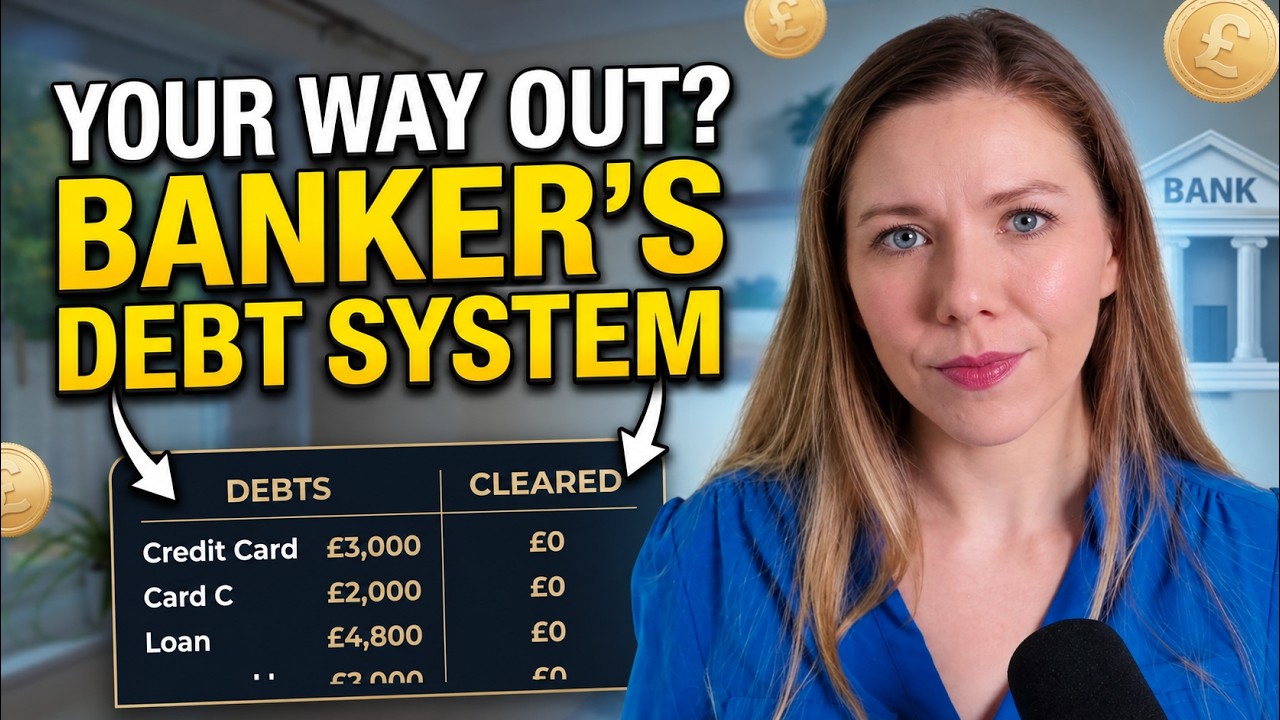
Snowball or Avalanche? The Debt Repayment System I Actually Use
You can earn decent money and still feel like you can't afford your own life.
You get paid. The bills go out. The debt payments go out. And you're already working out what can wait until next month.
From the outside, you're doing fine. Inside, you're thinking: I work too frigging hard to feel this trapped.
Then you look up how to get out of debt, and someone tells you to pay off the smallest balance first. Okay. But what if I'm still spending more than I earn? What if half my payment is disappearing into interest? What if paying off a different debt would actually give me room to breathe?
That's the bit I want to talk about. Because choosing which debt to attack is only part of the plan. We also need to stop the debt growing, see whether we can make it cheaper, and build a repayment plan that survives actual life.
I use a combination of approaches for my own debt. A bit of snowball, a bit of avalanche, and a very practical question: which move makes next month easier? And in my eight years in banking, I spent a lot of my time helping other people do the same, whatever their income.
One thing before we start. I'm sharing my experience and general information here. The right route depends on your circumstances.
First, the number you might have been avoiding
How much does your life actually cost? Not what you think it should cost. Not what it cost before you had children or moved out. What it costs now.
I'm not assuming you've been wildly irresponsible. Childcare happens. Rent goes up. Food feels like it creeps up every single day. Sometimes the salary that used to feel comfortable simply doesn't stretch as far. Thanks, inflation.
But whatever got us here, we need to see where "here" is.
- Start with the money that reliably lands in your account after tax.
- Look at everything going out: essentials, spending, subscriptions and required debt payments.
- Check bank accounts and credit cards. If groceries are going on a card, they still count as spending. Just don't count the same purchase twice when you repay it.
- Look back over a full year, because one normal-looking month can hide an awful lot. Annual insurance. Car costs. School uniforms. Christmas. The subscription you completely forgot renews in November. Divide yearly costs by twelve to see their monthly impact.
I do a proper review once a quarter, and I still found another £36 a month I could save last time round. That's £432 a year. From someone who actually checks. Things sneak back in.
Close the gap before you attack the debt
Now subtract your real outgoings from your income.
If the answer is minus two hundred, you have a £200 monthly gap before we even start talking about extra debt repayments. Your first target is to close that gap.
When I say "get to zero", I mean stop running a monthly deficit. I do not mean empty your bank account.
Because paying £300 off a card, then borrowing £200 to get through the month, is not the £300 of progress it feels like. Sorry, not sorry.
Go through the spending. Cancel what you don't use. Challenge what has crept up. Look at the bigger costs as well as the little ones. But if you've already cut everything realistic, I'm not going to tell you a cancelled streaming subscription will solve unaffordable childcare. Then we need to look at income, bigger changes and support with the debt itself.
One important distinction. If you're behind on rent, mortgage, council tax or energy, those need attention before the credit card repayment game. The consequences of not paying matter more than which interest rate is highest. And if essentials and required repayments don't fit, speak to your lenders and get free debt advice through somewhere like StepChange or MoneyHelper in the UK, or the equivalent service in your country. You don't have to wait until things completely fall apart.
Make your debt board
Nothing fancy. A spreadsheet or a piece of paper is fine. For every debt, write down:
- the balance
- the interest rate
- the required monthly payment
- any deal expiry date, and the rate it changes to afterwards
- for loans, the settlement figure and any early repayment charges
Then look at the board two ways: smallest balance first, and highest interest rate first. Those are the starting points for the two methods you've probably heard of.
The snowball. Keep up the required payments on everything and direct your extra money at the smallest balance. When that's gone, roll its payment into the next debt. The attraction is momentum. Something disappears from the list.
The avalanche. Keep up the required payments and put the extra towards the highest-interest debt. With the same repayment budget, that generally saves the most interest.
Both make sense. But before I chose my order, I asked another question.
Can I change what this debt is costing me?
This is the bit I think of as putting the plan on steroids. No secret loophole. Just making sure as much of my repayment as possible actually reduces what I owe.
My first aim was to move as much expensive card debt as I reasonably could onto zero per cent. That won't be available to everyone. A credit score alone doesn't guarantee approval, an affordable offer or a big enough limit. Use a soft-search eligibility checker where you can before applying.
Compare the whole offer: the fee, the interest-free period, the transfer limit and what happens afterwards. The longest deal isn't automatically the cheapest.
Say you move £3,000 with a three per cent fee. That fee is £90. If it's added to the balance, you now owe £3,090. You haven't paid off £90. You've added it. The question is whether that cost buys you a worthwhile saving on interest.
Keep up the minimum payments, check the terms and avoid new spending on the card. Most importantly, have a plan for the end date. "I'll get another deal later" is a hope, not a repayment plan.
For me, refinancing meant replacing existing borrowing with a better arrangement. It did not mean discovering I had an empty card and going shopping.
What about one big loan?
I understand the appeal. One payment. A clear finish date. Less mental clutter.
But a smaller monthly payment can come from paying for longer. You might feel relief each month while paying more overall. Compare the total repayable, fees, term and affordability. Be especially careful about securing previously unsecured debt against your home, and talk the alternatives through with a free debt adviser first.
You can also build an end date into a card repayment plan. A new loan isn't the only way to get structure.
My hybrid: an early win, then breathing room
Once you've explored the options, update your debt board. Now you're choosing your order based on the situation you actually have.
I liked an early win. Clear something manageable, get it off the list and feel the plan starting to work. Then I looked at what would free up money each month. Because there's a difference between reducing a balance and removing a payment you're struggling to afford.
Here's a made-up example. Imagine two interest-free debts, with enough time left on both deals. One has £500 left and requires £100 a month. The other has £2,000 left and requires £40 a month.
If you have £500 genuinely available after essentials and a small buffer, clearing the first debt removes that £100 monthly commitment now. Putting £500 into the second reduces what you owe, but it might not release anything like as much each month.
Now imagine your budget was £80 short each month. Removing that £100 payment could turn minus eighty into plus twenty.
That's the moment where I would not automatically send the entire £100 to the next debt. Eighty pounds has a job already: stopping you needing to borrow it again. That isn't failing at the snowball. That's making the plan work.
There is a catch. If another debt is charging very high interest, or a zero per cent deal ends soon, prioritising monthly breathing room may cost you more. So compare the trade-off. I'm looking at three things together: interest cost, upcoming deadlines and monthly breathing room.
Don't build a plan that only works if nothing goes wrong
If every spare pound goes to debt and you have absolutely nothing left at the end of the month, one unexpected bill can send you straight back to the card. That's why I want some money between me and the next problem.
There isn't one perfect starter buffer for everyone. Holding cash while paying high interest has a cost too. This is a balance, not a demand to build a huge savings pot before touching your debt.
And predictable expenses need their own space. Christmas is not an emergency. The annual insurance bill is not an emergency. We knew they were coming. If your budget only works in a month with no birthdays, no car costs and no annual bills, it doesn't work yet.
What to do next
- Find your real monthly number.
- Make the debt board.
- Look at whether you can reduce the interest.
- Choose a first target with the costs, deadlines and monthly payments in front of you.
- Check in on payday. If the plan slips, investigate what happened instead of deciding you're hopeless.
You don't need to solve the entire balance tonight. You need to replace "I have no idea how I'm getting out of this" with "I know what my next move is".
The beginning can be the hardest part, because you're doing the work before much of the relief has arrived. But as debts disappear, payments become money you get to choose what to do with. Being able to change jobs without quite so much panic. Having room for a family expense. Getting paid and keeping more of it.
I can't promise an exact date or that nothing will get in the way. But debt does not have to be a permanent feature of your life.
Freedom is not a feeling. It's a system. And this is one of the systems that can help you build it.
Watch the full video
I Spent 8 Years In Banking. This Is The Debt System I Use